
The situation in the UK gaming sector is becoming increasingly urgent. While investment, talent, and technology are all improving rapidly, execution gaps are widening at the same time. This imbalance is now shaping the future competitiveness of studios across the region.
The UK Gaming Industry in 2026: Growth Is Real, But So Are the Structural Weak Points
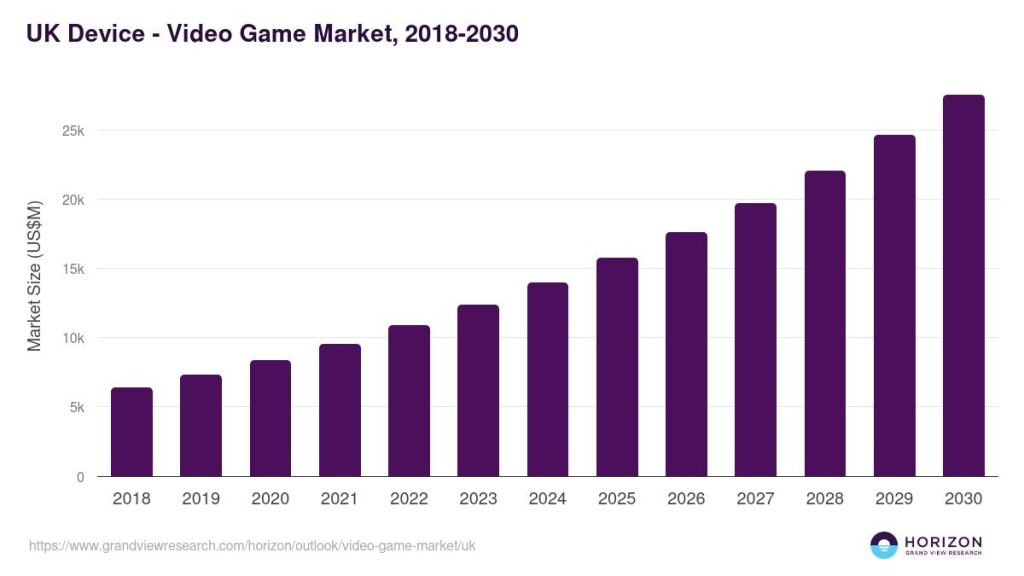
The UK gaming industry is expanding at a rapid and historically significant pace. Investment is increasing, global demand for immersive experiences is rising, and technologies like XR development UK, cloud gaming, and AI in gaming UK are reshaping the entire production pipeline.
Moreover, the UK has strengthened its position as one of the top global hubs for game development talent, innovation, and creative production. This has created a highly competitive environment where both startups and established studios are pushing boundaries faster than ever before.
However, and this is critical, this growth is not evenly matched by execution capability. Infrastructure, production pipelines, and scalability frameworks are not evolving at the same speed as creative ambition.
While the industry is scaling outward, many studios are struggling to scale inward. In other words, they are growing in number but not in production maturity. This creates a dangerous imbalance between demand and delivery capacity.
As a result, the gap between ambition and delivery is widening.
What is the UK gaming industry?
The UK gaming industry is a global ecosystem that includes developers, publishers, XR studios, middleware providers, and technology innovators focused on building interactive entertainment across console, PC, mobile, and immersive platforms. It also includes rapidly growing segments like cloud gaming and AI-driven experiences.
Why is the UK gaming industry growing?
The UK gaming industry is growing due to:
• Increased government-backed funding programs
• Rising global demand for immersive gaming experiences
• Rapid adoption of XR and AI-driven game development
• Expansion of indie, mid-tier, and AAA studios
• Strong technical and creative talent pipeline
Additionally, global publishing platforms and digital distribution have lowered entry barriers, enabling faster studio creation than ever before.
However, despite these strong fundamentals, structural inefficiencies are slowing down execution.
UK Gaming Market
The Execution Crisis: Why Game Studios Are Struggling to Scale in 2026
Although creativity remains one of the UK’s strongest advantages, execution is becoming the primary limiting factor. Many studios underestimate the complexity of scaling modern game systems.
Many studios can build prototypes quickly. However, scaling those prototypes into stable, production-ready systems is where breakdown begins. This transition requires engineering discipline that many teams lack.
This is especially true in XR development UK, where technical complexity is significantly higher. The combination of real-time rendering, hardware limitations, and interaction design creates compounding development challenges.
Why do game studios struggle to scale?
Game studios struggle to scale due to:
• Weak system architecture design from the start
• Increasing technical debt during rapid development cycles
• Poor performance optimization under real-world load
• Lack of cross-platform engineering strategy
• Limited focus on long-term scalability planning
These issues often remain hidden during early development phases. However, they become highly visible when user demand increases or multiplayer systems go live.
The hidden cost of poor execution
What many studios don’t realize is that execution failures don’t appear immediately. Instead, they accumulate silently over time.
Instead, they emerge later in the pipeline:
• Late-stage performance breakdowns
• Multiplayer instability
• Broken UX in immersive environments
• Delayed releases and budget overruns
These issues not only affect product quality but also damage long-term studio reputation.
Therefore, what looks like a creative success at prototype level often becomes a technical failure at production scale.
XR Development UK: The Fastest-Growing Yet Highest-Risk Segment
XR is one of the most exciting areas in the UK gaming industry, but also one of the most failure-prone. Studios are attracted by its potential but often underestimate its engineering demands.
While VR, AR, and MR unlock powerful immersive experiences, they also introduce complex engineering challenges. These challenges multiply as projects scale across devices and platforms.
What is XR in gaming?
XR (Extended Reality) in gaming refers to immersive technologies that merge physical and digital environments using VR headsets, AR overlays, and mixed reality systems. These systems aim to create fully interactive and spatially aware experiences.
Why do XR projects fail?
XR projects fail due to:
• High latency that breaks immersion instantly
• Device fragmentation across platforms and headsets
• Lack of optimized rendering pipelines
• Weak multiplayer synchronization systems
• Insufficient UX and interaction design
In many cases, even minor technical flaws result in complete user disengagement.
The scalability problem in XR
One of the biggest issues is that XR projects are often built like experiments, not systems. This leads to structural weaknesses in architecture and performance design.
As a result:
• They perform well in demos
• But fail under real-world user load
• And cannot scale beyond limited environments
This is why many XR projects never reach commercial maturity.
The Shift From Experimentation to Production in the UK Gaming Industry
The UK gaming industry is now entering a critical transformation phase. This shift is redefining how studios approach development and delivery.
Previously, studios were rewarded for experimentation and innovation. However, in 2026, the focus has shifted toward reliability, scalability, and production readiness.
What scalable game development means
Scalable game development refers to building systems that can handle:
• Increasing user loads
• Complex real-time interactions
• Cross-platform deployment
• Long-term content expansion
It also includes designing systems that remain stable under unpredictable usage patterns.
Why scalability is now essential
Because:
• Player expectations are higher than ever
• Games are now live-service products
• XR systems require constant performance stability
• AI-driven systems increase backend complexity
Additionally, competition has intensified globally, making technical excellence non-negotiable.
Therefore, studios must move from “build fast” to “build sustainably.”
AI + XR: The New Competitive Advantage in the UK Gaming Industry
AI is no longer a supporting feature, it is becoming a core system in modern game development. Its role now extends beyond gameplay into core production efficiency.
When integrated with XR, it creates adaptive, intelligent, and highly scalable immersive environments. This combination is reshaping how games are designed and delivered.
What is the role of AI in gaming?
AI in gaming is used for:
• Creating intelligent and reactive NPCs
• Generating dynamic environments and assets
• Optimizing real-time performance
• Personalizing player experiences at scale
It also helps reduce development time significantly.
Why AI is changing scalability
AI is not just improving gameplay, it is improving production efficiency. This is a major shift in development economics.
It enables faster content generation, reduced manual workload, smarter optimization systems ans adaptive difficulty balancing. As a result, AI is becoming a key differentiator in competitive studios.
What High-Performing Studios Are Doing Differently
While many studios struggle, a smaller group consistently scales successfully. Their success is not accidental, it is structural.
The difference is not creativity, it is engineering discipline. This discipline defines long-term success.
How can game studios scale successfully?
Game studios scale successfully by:
• Prioritizing performance-first architecture
• Designing for scalability from day one
• Implementing continuous optimization loops
• Building cross-platform compatibility early
• Collaborating with specialized technical partners
These practices significantly reduce long-term risk.
Strategic advantage of high-performing studios
These studios:
• Reduce rework by 40–60%
• Launch faster with fewer bugs
• Scale user base without system failure
• Maintain consistent performance across platforms
This gives them a strong competitive edge in a crowded market.
Therefore, execution maturity directly determines market success.
How Uverse Digital Helps Studios Scale in the UK Gaming Industry
In a market where execution is the bottleneck, studios need more than development, they need engineering support that understands scale. This is where specialized partners become essential.
Uverse Digital helps bridge this gap by focusing on production-ready immersive systems. The goal is not just to build, but to ensure long-term scalability.
What services does Uverse Digital offer?
Uverse Digital offers:
• XR Development Services
• Game Development Services
• AI Development Services
• UI/UX Design Services
These services are designed to work together as a unified development ecosystem.
Core value proposition
Unlike traditional studios, Uverse Digital focuses on:
• Execution stability
• Cross-platform scalability
• Production-grade readiness
• Long-term system performance
This ensures studios don’t just launch, they scale.
Final Summary
The UK gaming industry is experiencing strong growth, but beneath that growth lies a serious execution challenge. While investment and innovation are accelerating, production readiness is not keeping pace.
As a result, many studios are struggling to scale beyond prototypes due to performance, architecture, and system limitations.
Ultimately, success in 2026 will depend on execution maturity, not just creative ambition.
If you’re building in the UK gaming industry, execution will determine your success more than innovation. The gap between idea and production is where most studios fail today.
Uverse Digital helps studios transform immersive ideas into production-ready, scalable gaming systems built for performance and real-world deployment.
Book a consultation today and get a custom roadmap to scale your next XR or gaming project.
FAQs
Why is the UK gaming industry growing so fast?
Because of increased investment, government support, and rapid adoption of immersive technologies like XR and AI. It is also driven by global demand for interactive entertainment.
What is the biggest challenge in the UK gaming industry?
The biggest challenge is scalability, many studios can build prototypes but struggle to scale them into production systems. This gap is widening in 2026.
Why do XR games fail?
XR games fail due to latency issues, poor optimization, device fragmentation, and lack of scalable architecture. These issues become critical under real-world usage.
Is AI important in game development?
Yes, AI is now essential for NPC behavior, content generation, performance optimization, and scalable gameplay systems. It also improves production efficiency.
How can studios improve scalability?
By adopting performance-first development, scalable architecture design, and continuous optimization practices. Early planning is also critical.
About the author : Uverse Digital

Uverse Digital helps businesses build high-performance games, XR experiences, mobile and web apps. Creating scalable digital solutions that deliver real business value, with reliable white-label development for agencies.
- The UK Gaming Industry in 2026: Growth Is Real, But So Are the Structural Weak Points
- What is the UK gaming industry?
- The Execution Crisis: Why Game Studios Are Struggling to Scale in 2026
- XR Development UK: The Fastest-Growing Yet Highest-Risk Segment
- The Shift From Experimentation to Production in the UK Gaming Industry
- AI + XR: The New Competitive Advantage in the UK Gaming Industry
- What High-Performing Studios Are Doing Differently
- How Uverse Digital Helps Studios Scale in the UK Gaming Industry
- Final Summary
- FAQs
Have a Project in Mind?
Let’s turn your idea into a high-quality game, XR experience, or app.



Stay Ahead of the Game
Get XR insights, dev tips, and industry updates straight to your inbox
Join our insider list for cutting-edge content on game development, performance optimization, and immersive experiences, curated for industry leaders like you.
