
Augmented Reality in Business 2026:Introduction
Augmented reality in business is transforming how organizations bridge the gap between digital and physical experiences. In 2026, augmented reality in business is no longer limited to experimental campaigns or novelty-driven interactions. Instead, it is being adopted as a practical tool to enhance customer engagement, improve operational efficiency, and create immersive, real-time experiences across industries such as retail, gaming, manufacturing, and enterprise services.
However, as adoption grows, so does the expectation for results. Businesses are no longer satisfied with short-term AR activations that generate attention but fail to deliver long-term value. Instead, they are prioritizing scalable, performance-driven AR and XR solutions that integrate into existing systems, support real-world use cases, and deliver measurable outcomes. As a result, augmented reality is evolving from a visual enhancement into a strategic business capability that influences how products are sold, how employees are trained, and how users interact with digital environments.
At Uverse Digital, this shift reflects a broader industry transformation. Organizations are moving beyond asking “What is augmented reality?” and are now focused on “How can we implement AR effectively at scale?” From interactive product visualization to immersive training simulations and game-engine-powered environments, the focus is now on building robust, production-ready AR systems that deliver real-world impact rather than temporary engagement.
In this blog, we will explore how augmented reality in business is reshaping industries in 2026, why companies are shifting from experimental AR campaigns to scalable XR systems.
What Is Augmented Reality in Business Today?
Augmented Reality (AR) refers to the integration of digital content into the real-world environment, allowing users to interact with virtual elements in real time.
However, modern AR has evolved far beyond simple filters or overlays.
Today, augmented reality in business includes:
- Real-time 3D rendering for immersive visuals
- Spatial tracking and environment mapping for accurate interaction
- AI-powered systems that adapt to user behavior
- Cross-platform deployment across mobile, web, and XR devices
As a result, AR is no longer just a visual enhancement. Instead, it has become a core interaction layer that connects physical and digital experiences seamlessly.
What is augmented reality in business?
Augmented reality in business is the use of AR technology to overlay digital content onto real-world environments, enabling interactive experiences for customers, employees, and enterprises.
How is AR used in real-world industries?
Businesses use AR for product visualization, employee training, immersive marketing, and real-time simulations across retail, healthcare, manufacturing, and gaming.
Why Augmented Reality Is a Strategic Priority for Businesses
Businesses are increasingly adopting augmented reality in business because it delivers measurable, real-world outcomes that directly impact performance. More importantly, it reshapes how users interact with products, services, and digital environments, creating experiences that are far more engaging than traditional formats.
Furthermore, as digital competition intensifies across industries, companies are under pressure to differentiate not just through products, but through experience quality. In this context, augmented reality provides a powerful way to improve decision-making, strengthen engagement, and create more immersive customer journeys.
Increased Engagement Through Immersive Experiences
Augmented reality transforms static digital content into dynamic, interactive environments. As a result, users are no longer passive viewers, they become active participants within the experience itself.
In addition, this shift fundamentally changes how brands communicate value, making interactions more memorable, intuitive, and emotionally engaging.
How AR Improves User Interaction
AR enhances user interaction in several practical ways:
- Real-time engagement with digital elements that respond instantly to user actions
- Spatial interaction that feels natural, intuitive, and physically contextual
- Stronger emotional connection with brands through immersive storytelling and participation
For example, brands like ASOS are already leveraging AR to create more personalized and interactive shopping experiences, allowing users to visualize products more effectively before purchase.
Consequently, businesses that implement AR effectively often experience:
- Higher session duration and deeper engagement
- Improved user retention across digital platforms
- Stronger brand recall due to immersive interaction
Moreover, these outcomes are not just engagement metrics, they directly influence conversion performance and long-term customer loyalty.
From AR Campaigns to Scalable XR Systems
Many businesses initially adopt augmented reality through small campaigns, such as social media filters or short-term marketing activations. However, this approach is quickly becoming outdated.
Today, augmented reality in business is shifting toward persistent, scalable XR systems that integrate into broader digital ecosystems. Instead of one-off experiences, companies are now building long-term immersive platforms that deliver continuous value.
As a result, AR is no longer just a marketing tool. It is becoming part of core business infrastructure.
Moreover, this shift is driven by increasing demand for:
- Consistent user experiences across platforms
- Real-time interaction at scale
- Measurable performance and ROI
Therefore, businesses that continue relying only on campaign-based AR risk falling behind competitors who are investing in scalable systems.
The Limitations of Traditional AR Campaigns
While AR campaigns can generate short-term engagement, they often lack long-term impact.
For instance, many experiences:
- Are not reusable
- Do not integrate with business systems
- Fail to generate meaningful data over time
Consequently, businesses struggle to justify continued investment in AR when it is treated as a one-time initiative.
The Rise of Scalable XR Ecosystems
In contrast, modern AR strategies focus on building connected XR ecosystems.
These systems combine:
- Augmented Reality
- Virtual Reality
- Real-time 3D environments
- AI-driven interaction layers
As a result, businesses can deliver persistent, interactive experiences across devices and platforms.
Furthermore, technologies such as spatial computing and multiplayer AR environments are enabling users to interact not just with content, but with each other in shared digital spaces.
This is where the real value of augmented reality in business begins to emerge.
How Uverse Digital Builds Scalable AR and XR Solutions
While many approaches to augmented reality focus on short-term or surface-level experiences, scalable AR requires a more structured and system-driven methodology. Instead of treating AR as a standalone feature, modern development positions it as part of a broader immersive technology ecosystem designed for performance, scalability, and real-world deployment.
This shift reflects how augmented reality in business is evolving, from isolated experiments into connected, production-ready systems that operate reliably across platforms, devices, and use cases.
Modern AR development typically relies on real-time engines such as Unity and Unreal to ensure high performance and visual consistency. This enables efficient rendering, modular architecture, and responsive interaction handling across devices. As a result, experiences remain stable even under complex, real-world conditions.
Finally, production-grade AR systems are designed for real deployment rather than prototyping. This includes structured architecture, performance optimization, and scalability planning to support long-term use in business environments.
Core Services Involved in AR & XR Development
- XR Development Services : Building immersive, real-time AR/VR experiences using engine-based workflows
- Game Development Solutions : Creating interactive environments with high-performance rendering and engagement mechanics
- AI Integration Services : Enhancing AR systems with intelligent behavior, automation, and adaptive interactions
- UI/UX Design for XR : Designing spatial, intuitive interfaces optimized for real-world interaction
- 3D Environment Development : Building realistic, interactive digital spaces for immersive experiences
Where Augmented Reality Is Growing Globally
Augmented reality in business is expanding rapidly across global markets. However, certain regions are accelerating adoption faster due to strong digital infrastructure and innovation ecosystems.
Among these, the UK stands out as a leading hub for immersive technology.
Retail and eCommerce Innovation
Retail remains one of the strongest drivers of AR adoption. As online shopping continues to grow, businesses are under pressure to reduce uncertainty and improve customer experience.
For instance, brands like ASOS and IKEA are using AR to enhance product visualization and create interactive shopping journeys.
As a result, customers can better understand products before purchasing. Consequently, businesses benefit from improved conversions and reduced return rates.
Gaming and XR Innovation Ecosystem
The gaming industry continues to push the boundaries of immersive technology. In particular, companies like Niantic have demonstrated how AR can create large-scale, interactive experiences through games like Pokémon GO.
Therefore, gaming is not just entertainment, it is a testing ground for future business applications of AR.
Moreover, this innovation is influencing enterprise solutions, training simulations, and real-time collaboration environments.
Government Support and Innovation Growth
Another key driver of AR growth is institutional support. Organizations such as Innovate UK are actively funding immersive technology initiatives.
As a result, businesses gain access to:
- Research and development support
- Innovation funding
- Collaborative ecosystems
This, in turn, accelerates the adoption of augmented reality across industries.
Optimization Insights: How Businesses Can Successfully Implement AR
While the potential of augmented reality in business is clear, successful implementation requires a strategic approach.
First, businesses must define a clear use case. Without a specific goal, AR initiatives often fail to deliver measurable value.
Additionally, companies should prioritize user experience over visual novelty. Although AR can be visually impressive, it must also be intuitive and functional.
Furthermore, choosing the right technology stack is critical. Scalable XR systems require strong architecture and performance optimization.
Finally, businesses must continuously measure and refine their AR experiences using real user data.
As a result, organizations can move from experimentation to sustainable, high-impact deployment.
The Future of Augmented Reality in Business
Looking ahead, augmented reality is set to become a foundational layer of digital interaction.
Several trends are shaping this future:
- Integration of AI with AR for smarter interactions
- Growth of spatial computing environments
- Expansion of persistent XR ecosystems
Consequently, AR will move beyond individual use cases and become part of everyday workflows, communication, and decision-making.
Moreover, businesses that invest early will gain a significant competitive advantage as immersive technologies mature.
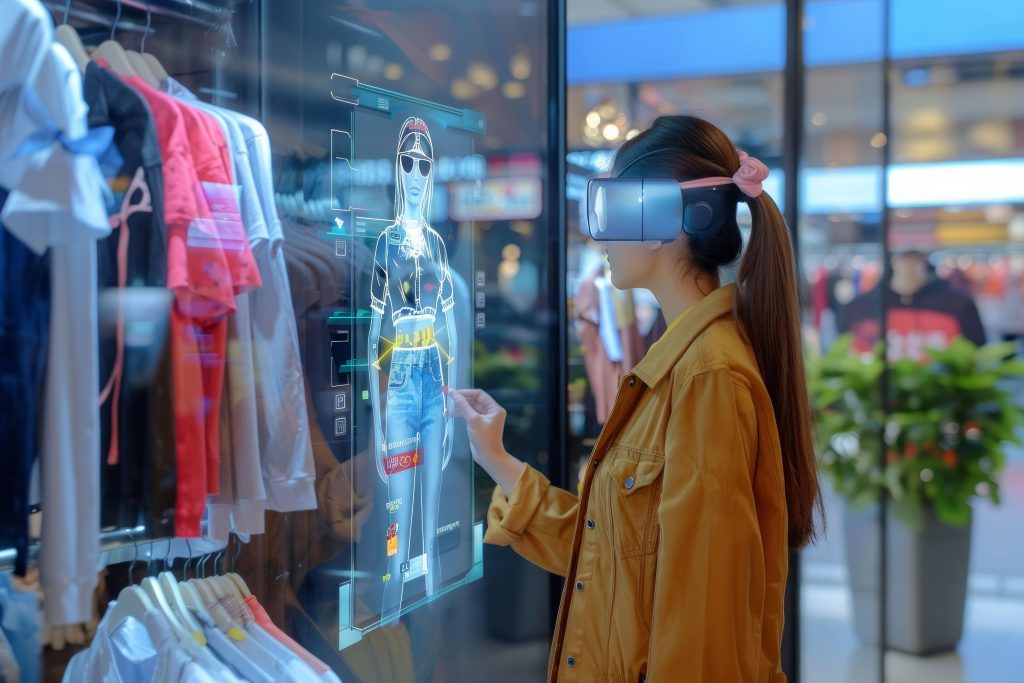
AR in Business
Blog Summary
Key Takeaways:
- Augmented reality in business is no longer optional; it is a strategic necessity
- AR improves engagement, conversions, and operational efficiency
- Businesses are shifting from one-off campaigns to scalable XR systems
- Retail, gaming, and enterprise sectors are driving adoption
- Long-term success depends on execution, not experimentation
Conclusion: Turning AR Into Real Business Impact
Augmented reality has evolved from a novelty into a powerful business tool. However, the real value of AR lies not in the technology itself, but in how it is implemented.
Businesses that focus only on surface-level experiences will struggle to see long-term results. In contrast, those that invest in scalable, performance-driven systems will unlock measurable impact.
At Uverse Digital, the focus is on helping organizations move beyond experimentation and into execution, building immersive experiences that are not only engaging but also practical, scalable, and results-driven.
Build Scalable AR Experiences That Deliver Real Results
If your business is exploring augmented reality, now is the time to move from ideas to implementation.
Let’s build immersive experiences that don’t just impress, but perform.
FAQs: Augmented Reality in Business
What is augmented reality in business?
Augmented reality in business refers to using AR technology to enhance real-world environments with digital elements, enabling interactive and immersive user experiences.
How does AR improve customer experience?
AR allows customers to visualize products, interact with features, and make informed decisions, which leads to higher satisfaction and engagement.
Which industries benefit most from AR?
Retail, gaming, healthcare, manufacturing, and logistics benefit significantly from AR due to its ability to improve interaction, training, and efficiency.
Is augmented reality expensive to implement?
Costs vary depending on complexity. However, scalable AR solutions provide long-term ROI through improved conversions, efficiency, and reduced operational costs.
What is the future of AR in business?
AR will become a core interaction layer, integrated with AI and spatial computing, enabling more immersive and intelligent digital experiences.
About the author : Sania Ejaz



Stay Ahead of the Game
Get XR insights, dev tips, and industry updates straight to your inbox
Join our insider list for cutting-edge content on game development, performance optimization, and immersive experiences, curated for industry leaders like you.
