
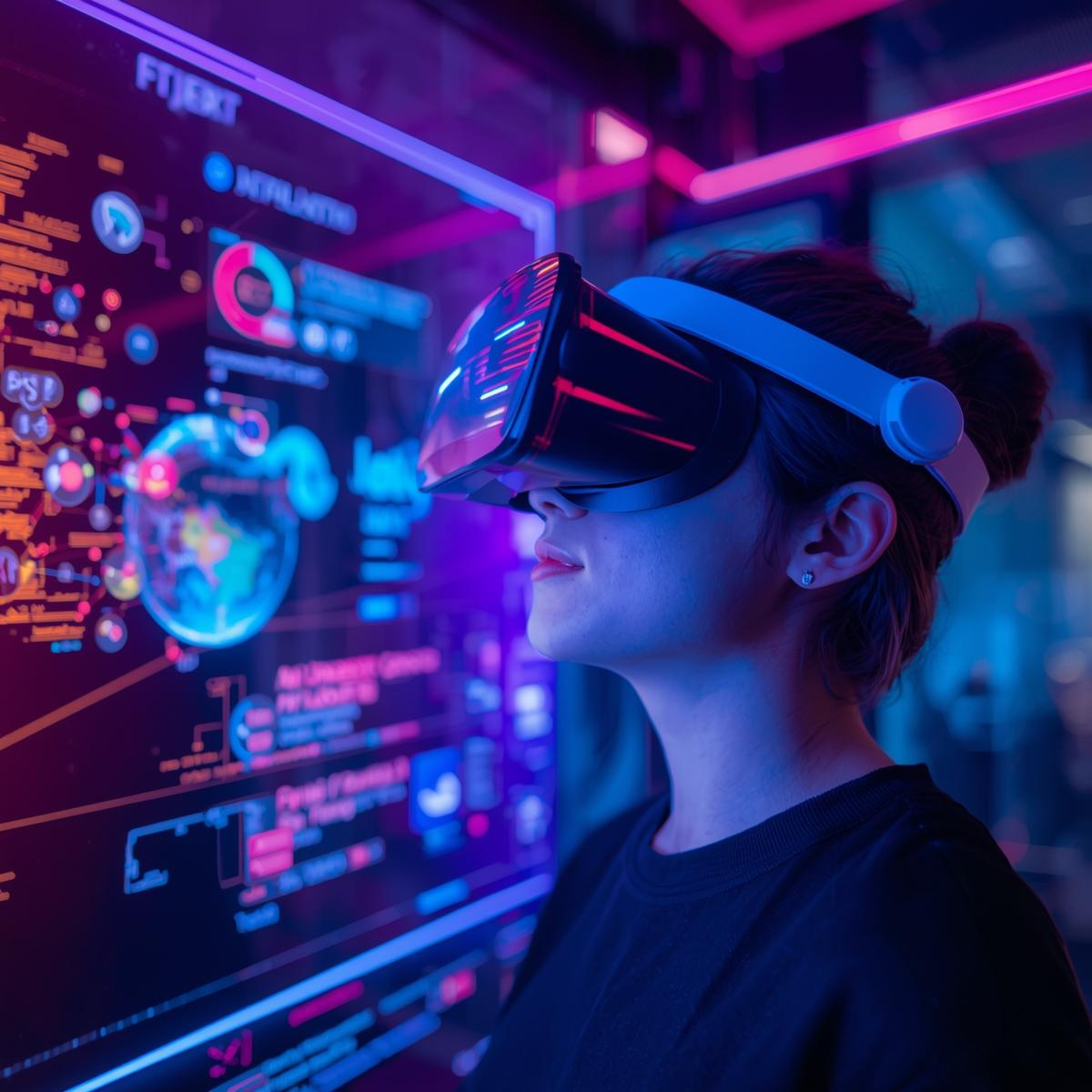
Why Mixed Reality Interaction Systems Are Critical in 2026
Mixed reality (MR) is no longer a futuristic concept. In 2026, mixed reality interaction systems are becoming a cornerstone for enterprise, healthcare, education, and gaming. Studios and organizations are shifting from experimental deployments to production-ready MR solutions that prioritize natural interaction, accessibility, and scalability.
To succeed, developers and technical teams need to focus on designing MR systems that not only provide immersive experiences but also ensure inclusive user access and seamless performance across platforms. Moreover, leading innovators are leveraging XR training, multiplayer games, and game AI services to build MR experiences that are technically robust, user-friendly, and ready for scale.
The opportunity is clear. Organizations that implement mixed reality interaction systems now will define the benchmarks for immersive engagement in 2026 and beyond. Therefore, this blog explores the core principles, design strategies, and technical best practices that make these systems effective, while also showing practical approaches for teams to implement them.
Core Principles of MR Interaction Systems
Designing Natural and Inclusive MR Experiences
Mixed reality experiences succeed when they are designed with users, accessibility, and scalability in mind. Consequently, mixed reality interaction systems require careful consideration of how humans perceive and interact with both virtual and physical elements simultaneously. Furthermore, technical teams must address interaction models, input modalities, and system performance to deliver seamless experiences.
Additionally, XR training, multiplayer games, and game AI services can provide practical examples of building MR experiences that are intuitive and inclusive. By integrating these approaches, studios can ensure that MR systems not only engage users but also scale reliably across platforms.
The following principles are critical for building mixed reality interaction systems that meet enterprise, healthcare, educational, and gaming requirements.
Natural Interaction Design
Natural interaction design in MR focuses on how users manipulate virtual objects using gestures, voice commands, and haptic feedback. Therefore, technical teams should prioritize spatial interaction design to reduce cognitive load and create experiences that feel intuitive.
Best practices include:
- Implementing gesture recognition systems that map accurately to real-world movements
- Designing voice input and command structures that are robust to variations in speech
- Incorporating haptic feedback to reinforce user actions and enhance immersion
Furthermore, multiplayer games and AI-driven interactions can integrate intelligent systems that respond dynamically to user behavior. As a result, mixed reality interaction systems feel natural even in complex, multi-user environments.
Accessibility in Mixed Reality
Accessibility is essential for inclusive MR experiences. Therefore, systems should accommodate diverse users, including those with physical or cognitive differences. This requires careful design of visual, auditory, and haptic elements.
Key strategies include:
- Providing customizable UI elements and color contrast options
- Ensuring voice commands and gesture inputs are accessible for a wide range of abilities
- Testing MR applications with diverse user groups to identify and resolve usability barriers
Moreover, focusing on accessibility ensures that MR experiences reach broader audiences and comply with emerging standards in XR. Consequently, inclusive design improves overall usability and engagement.
Scalability and Performance Considerations
Scalability ensures MR systems perform reliably across devices and platforms. In addition, performance factors such as latency, frame rates, and network synchronization are critical, especially for multiplayer and enterprise applications.
Best practices for scalability include:
- Optimizing rendering pipelines for multiple platforms including mobile, web, and enterprise XR systems
- Implementing efficient network architectures for real-time multiplayer interactions
- Using AI-driven optimizations to manage computational load and maintain responsiveness
Therefore, integrating scalable architectures and intelligent optimization ensures mixed reality interaction systems remain robust as user adoption grows.
Implementing MR Solutions in 2026
Practical Approaches to Building Mixed Reality Interaction Systems
Implementing effective mixed reality interaction systems in 2026 requires a careful combination of design, engineering, and content strategies. Therefore, technical teams must address interaction models, accessibility, and system performance from the outset. By focusing on these areas, MR experiences can feel intuitive, scalable, and inclusive across multiple platforms.
One key aspect is user onboarding and training. Integrating XR training modules early helps teams understand system interactions and accelerates adaptation. Furthermore, multiplayer MR applications demand precise synchronization and AI-driven responsiveness to maintain immersive experiences across multiple users. Systems that leverage AI-driven interaction frameworks can dynamically adapt interactions, improving usability and realism.
Content design also plays a crucial role. Specifically, creating 3D assets optimized for performance and accessibility ensures that interactions remain smooth even on devices with different capabilities. Moreover, UI/UX design principles, including visual clarity, gesture mapping, and adaptive feedback, support users with diverse needs and maintain engagement.
Cross-platform deployment is another critical consideration. MR systems often need to function on mobile, web, and enterprise XR devices, which requires careful performance tuning and network architecture. Therefore, teams must consider latency, frame rates, and resource management to maintain consistent experiences. By combining thoughtful training, intelligent interaction models, optimized content, and accessible interfaces, mixed reality interaction systems can be implemented successfully and reliably in 2026.
FAQs
What are mixed reality interaction systems?
Mixed reality interaction systems combine physical and digital elements to allow users to interact naturally with virtual objects. They rely on technologies such as gesture tracking, voice commands, haptic feedback, and AI-driven responsiveness. Therefore, implementing these systems requires attention to spatial computing, accessibility, and performance to create immersive, reliable experiences.
Why is accessibility important in MR systems?
Accessibility ensures that MR experiences can be used by people with diverse abilities. In addition, it involves designing inclusive interfaces, voice and gesture input alternatives, customizable UI elements, and adaptive feedback mechanisms. Consequently, accessibility practices expand the user base and improve overall usability and engagement.
How can MR experiences be scaled across platforms?
Scaling MR experiences requires optimization for multiple platforms, including mobile, web, and enterprise XR devices. Moreover, developers must manage rendering performance, latency, network synchronization, and computational load. By leveraging modular architecture and AI-driven optimization, MR systems remain responsive and consistent, even in multiplayer or enterprise scenarios.
What are best practices for natural interaction in MR?
Natural interaction in MR focuses on creating intuitive ways for users to manipulate virtual content. Therefore, best practices include accurate gesture mapping, voice command recognition, haptic feedback, and spatial interaction models. Consequently, these practices improve immersion and reduce cognitive load, ensuring mixed reality interaction systems feel seamless.
How can organizations implement MR effectively in 2026?
Effective MR implementation involves a combination of UX/UI design, 3D content optimization, XR training, and AI-driven interaction models. Moreover, teams should plan for scalability, accessibility, and cross-platform deployment from the beginning. By following technical best practices, organizations can develop MR systems that are robust, inclusive, and future-ready.
Seizing the Opportunity of Mixed Reality in 2026
Implementing mixed reality interaction systems in 2026 requires technical precision, accessibility, and scalable design. By leveraging Uverse Digital’s XR Training, Multiplayer Games, Game AI, UI/UX Design, and 3D Content services, teams can build MR experiences that are immersive, inclusive, and ready for multiple platforms.
With careful attention to performance, intuitive interaction models, and accessible design, organizations can deliver MR solutions that maximize engagement and usability. Moreover, integrating AI-driven systems and optimized 3D content ensures experiences remain responsive and seamless across devices. Consequently, companies that adopt these practices now will set the standard for future-ready mixed reality applications.
Contact Uverse Digital today to book your free consultation and start creating high-performance MR solutions for gaming, healthcare, education, and enterprise.
About the author : Uverse Digital

Stay Ahead of the Game
Get XR insights, dev tips, and industry updates straight to your inbox
Join our insider list for cutting-edge content on game development, performance optimization, and immersive experiences, curated for industry leaders like you.
