
Introduction
Virtual reality is moving beyond traditional headsets and toward more natural, everyday forms of interaction. Meta VR Glasses are part of that shift, creating new possibilities for businesses that want to explore immersive technology without relying on bulky hardware.
For businesses, the opportunity goes beyond simply viewing digital content. These glasses could support interactive training, healthcare simulations, education, gaming, product experiences, and enterprise applications.
So, what could businesses actually build with Meta VR Glasses? The answer depends on the industry, the type of experience, and how developers use technologies such as spatial computing, eye tracking, hand interaction, AI, and 3D content.
What Are Meta VR Glasses?
Meta VR Glasses are designed to bring immersive digital experiences into a more lightweight glasses-based form. Instead of requiring users to wear a conventional VR headset, the concept focuses on a more natural way to interact with digital content.
For businesses, this difference matters.
A lighter form factor could make immersive experiences easier to use in workplaces, classrooms, healthcare environments, entertainment venues, and other real-world settings. As the technology develops, businesses may also have more opportunities to connect physical environments with digital experiences.
What Makes Meta VR Glasses Different?
Meta VR Glasses could change how people interact with immersive applications. Several capabilities are particularly relevant to developers and businesses.
Natural Eye and Hand Interaction
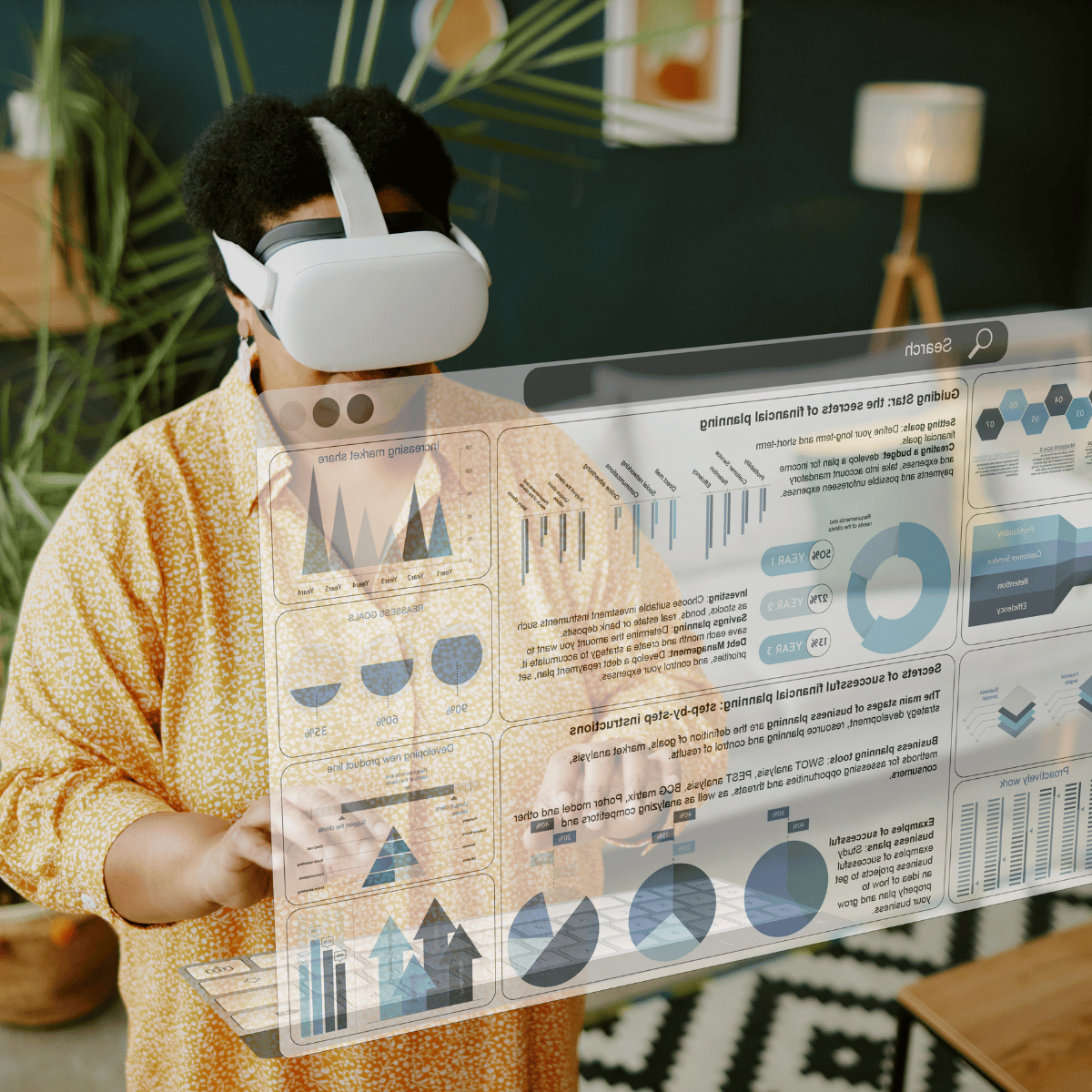
Traditional interfaces often depend on controllers, touchscreens, or keyboards. Meta’s glasses-based approach can make interaction more natural by using eye and hand movements.
For example, users could look toward a digital object and interact with it using hand gestures. This type of interaction could make training simulations, educational applications, and productivity tools easier to use.
A More Lightweight Experience
Conventional VR headsets can be useful for highly immersive applications, but they are not always practical for every situation.
A glasses-based device could offer a more comfortable option for experiences that users need to access for longer periods. Consequently, businesses could explore applications that fit more naturally into everyday workflows.
High-Resolution Immersive Experiences
High-quality visuals are important when businesses use immersive technology for training, simulation, visualization, or entertainment.
Better visual quality can help users understand digital objects, environments, and instructions more clearly. For instance, a healthcare simulation could present detailed 3D anatomy, while a product experience could allow customers to examine a virtual model from different perspectives.
What Can Businesses Build With Meta VR Glasses?
The potential business applications extend across several industries. More importantly, organizations can design experiences around specific business problems instead of simply adopting XR because it is a new technology.
Immersive Training and Simulations
Training is one of the strongest applications for immersive technology.
Businesses could create interactive simulations that allow employees to practice procedures, equipment operation, safety protocols, or customer interactions.
Instead of reading instructions alone, employees could learn by doing. They could repeat scenarios, receive feedback, and improve their performance in a controlled environment.
This approach could be especially useful where mistakes during real-world training are expensive or risky.
Healthcare Applications
Healthcare organizations can use immersive technology for education, medical training, patient engagement, and research.
For example, developers could create simulations that help students understand anatomy or allow healthcare professionals to practice specific procedures. Furthermore, interactive 3D environments could make complex medical concepts easier to visualize.
Uverse Digital has already worked on healthcare-focused immersive experiences, including an Intramuscular Injection Simulation created for academic research.
Education and Learning
Immersive learning can turn abstract concepts into interactive experiences.
Students could explore historical environments, examine 3D objects, conduct virtual experiments, or interact with educational characters. As a result, lessons can become more visual and experiential.
The same concept can also support language learning, professional education, and skills development.
Gaming and Entertainment
Gaming remains a natural use case for immersive devices.
Developers can create interactive worlds where users look, move, and interact with digital environments more naturally. Multiplayer experiences can take this further by allowing several users to participate in the same virtual environment.
However, successful immersive games require more than 3D graphics. Interaction design, game mechanics, AI, sound, animation, and user experience all contribute to the final experience.
Enterprise and Productivity
Businesses could also explore Meta VR Glasses for internal applications.
For example, employees might use immersive interfaces to visualize data, collaborate around 3D models, access digital instructions, or interact with virtual workspaces.
In manufacturing, architecture, engineering, and product development, teams could potentially examine digital models before making physical changes. This could reduce iteration time and make collaboration more visual.
How Could Meta VR Glasses Change XR Development?
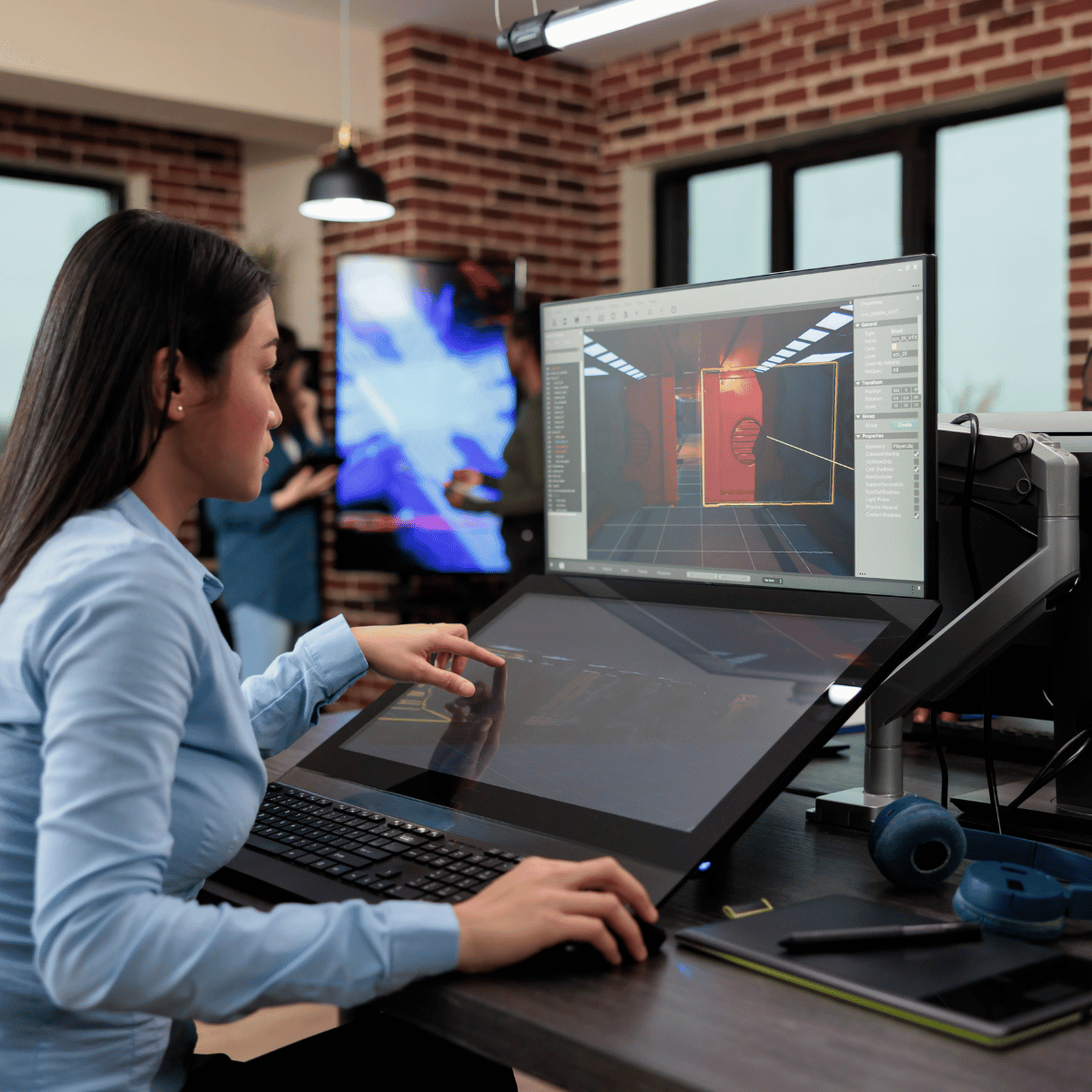
Developing for glasses-based immersive experiences requires a different approach from simply adapting a desktop application.
Designing for Gaze and Hand Interaction
Developers need to think carefully about how users discover, select, and manipulate digital objects.
Buttons that work well with a controller may not work as effectively when users interact through gaze and hand movements. Therefore, UX design becomes particularly important.
Clear visual feedback, intuitive gestures, readable interfaces, and appropriate interaction distances can make an immersive application easier to understand.
Adapting Existing VR Applications
Businesses that already have VR applications may not need to start completely from scratch.
Instead, developers can evaluate existing experiences and determine which elements can be adapted for a glasses-based interface. Some applications may require changes to navigation, interaction, graphics, or performance.
This creates an opportunity for businesses with existing XR investments to explore new hardware without completely abandoning previous development work.
Which Industries Could Benefit From Meta VR Glasses?
The technology has potential across multiple sectors.
Healthcare
Medical training, anatomy visualization, rehabilitation, research, and patient education could all benefit from interactive 3D experiences.
Education
Schools, universities, and training organizations could use immersive applications to make lessons more interactive and practical.
Enterprise
Companies could explore applications for employee training, collaboration, visualization, remote assistance, and workplace productivity.
Gaming and Entertainment
Immersive games and interactive entertainment could take advantage of natural eye and hand-based interaction.
Retail and Product Experiences
Brands could create interactive product demonstrations that let customers explore products virtually before making a purchase.
Ultimately, the strongest applications will be those that solve a genuine user or business problem.
Uverse Digital Services for Meta VR Glasses
Building a successful immersive application requires more than choosing a device. Businesses also need the right combination of development, design, 3D content, interaction, and testing.
Uverse Digital can support projects across several areas of immersive development.
VR, MR, and AR Design & Development
Uverse can design immersive applications around different extended reality environments and user requirements.
XR Training & Simulations
Training applications can turn complex procedures into interactive simulations where users learn through practice.
Healthcare XR Simulations
Healthcare organizations and research teams can use immersive environments for medical education, procedural training, and visualization.
Multiplayer Game Development
For entertainment and gaming projects, multiplayer development can connect users within shared interactive environments.
Game AI Development
AI can make immersive experiences more responsive by supporting intelligent characters, dynamic interactions, and adaptive gameplay.
UI/UX Design and 3D Content
Immersive applications depend heavily on user experience. Uverse can combine interface design, 3D modeling, animation, and interaction design to create experiences that feel natural rather than simply placing a traditional interface inside a virtual environment.
Uverse Digital Projects
Uverse’s existing immersive work provides useful examples of what businesses can build with XR technology.
Lora Learning
Lora Learning combines VR and mobile experiences with an AI-powered language-learning avatar. The project involved VR development, mobile development, UI/UX, environment design, QA, and publishing.
The project demonstrates how immersive technology can support interactive education rather than simply provide a visual experience.
Intramuscular Injection Simulation
This healthcare-focused simulation was developed as part of PhD research and demonstrates how VR can support procedural learning and medical education.
The experience shows the value of creating controlled environments where users can practice skills without the limitations of a physical training setup.
VR Chess
VR Chess demonstrates how a familiar game can become an immersive social experience. Instead of simply viewing a digital chessboard, players can interact with the game within a 3D environment.
VR Ninja Zombies
VR Ninja Zombies brings together immersive gameplay, interaction, 3D environments, and entertainment. It illustrates how game mechanics can be designed specifically around the possibilities of VR.
Should Your Business Build for Meta VR Glasses?
Meta VR Glasses could open new opportunities for businesses, but adopting new hardware should not be the starting point.
First, identify the problem you want immersive technology to solve.
Do you need more effective employee training? Could a 3D simulation improve healthcare education? Would customers benefit from interacting with a virtual product? Could an immersive game create a new revenue opportunity?
Once the business objective is clear, developers can determine whether Meta VR Glasses, traditional VR, AR, MR, or another platform is the right fit.
This approach keeps the technology aligned with the actual business requirement.
FAQs About Meta VR Glasses
What are Meta VR Glasses?
Meta VR Glasses are a glasses-based approach to immersive computing that can enable users to interact with digital experiences through more natural forms of interaction.
What can businesses build with Meta VR Glasses?
Businesses could build training simulations, healthcare applications, educational experiences, games, product demonstrations, productivity tools, and other interactive XR applications.
Can existing VR applications work with Meta VR Glasses?
Some existing applications may be adaptable. However, developers may need to modify interaction design, navigation, graphics, and performance to suit the new form factor.
Which industries can use Meta VR Glasses?
Healthcare, education, enterprise, gaming, entertainment, retail, manufacturing, and other industries could explore potential applications.
Do businesses need a custom XR application?
Not necessarily. The right approach depends on the business objective. Some organizations may benefit from adapting an existing application, while others may need a purpose-built immersive experience.
The Business Opportunity Behind Meta VR Glasses
Meta VR Glasses represent another step toward making immersive technology more natural and accessible. For businesses, the real opportunity is not simply owning new hardware. Instead, it lies in creating experiences that make training, learning, collaboration, entertainment, or customer engagement more effective.
As the technology develops, businesses that understand these possibilities early can begin identifying practical use cases and preparing their digital experiences.
For organizations exploring immersive technology, the next step is to define the experience first and choose the hardware that best supports it.
Have an idea for an immersive experience? Explore what you could build with Uverse Digital.
About the author : Sania Ejaz

Have a Project in Mind?
Let’s turn your idea into a high-quality game, XR experience, or app.


Stay Ahead of the Game
Get XR insights, dev tips, and industry updates straight to your inbox
Join our insider list for cutting-edge content on game development, performance optimization, and immersive experiences, curated for industry leaders like you.
